Right up to the hilt
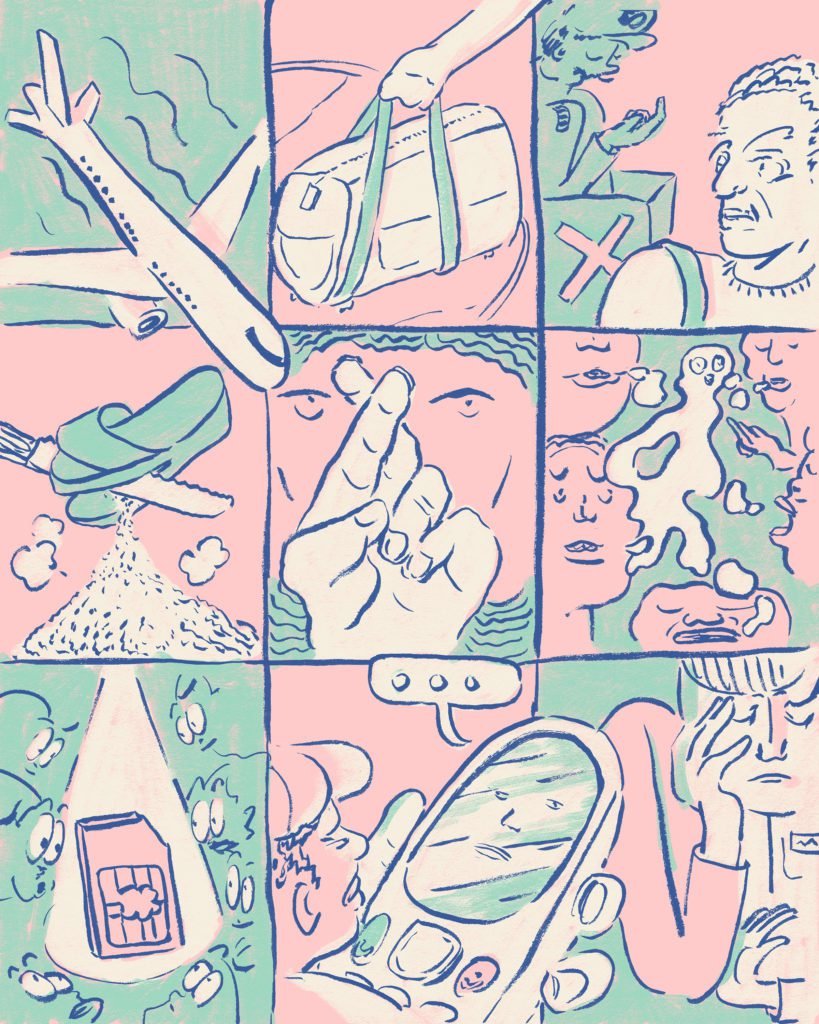
Donatus Chidera Okonkwo was charged for drug trafficking, 39B. The sentence is death. I remember him because of his name, specifically, his last name – Okonkwo. That is the name of the protagonist of one of my favourite novel Things Fall Apart by the Nigerian writer, Chinua Achebe. It was a pioneering novel. It told the African narrative from the native’s point of view instead of the Western colonialist’s. The book challenged English literature’s colonialist outlook on Africa. It is short enough to read in one sitting, which I strongly recommend. Doing so enables us to feel the full emotional brunt of its ending. I digress a little to recommend his other excellent book, A Man of the People, which hits closer to home. The Nigerian politics and politician he describes in that book are so strikingly similar to our own that one need only replace the Nigerian names of people and places with Malaysian ones and you would think Achebe wrote about Malaysia. A Man of the People is a meditation why political and societal change is difficult and why the majority, suffer though they do, still prefer the status quo. It accounts for why change is slow, stuttering, and even regressive in the beginning. I was excited to meet him when I saw his name on the Shah Alam High Court letter of appointment. I imagined he would be impressed with my knowledge of his tribe and village in Nigeria. However, when we met on the first case management date, it was an anti-climax. He was the usual court assigned drug trafficking African client: poor, poorly educated, and elementary in thought. He was oblivious to my paltry knowledge about his tribal origin. He was solely interested in how he was going to get out of his situation. His was the usual ‘airport case‘, which meant there was only sliver of narrative to fashion a defence from. Donatus’s story was this: He was asked by Chief, who was his boss, to fly to Malaysia to pass some items to Chief’s brother who was studying in Malaysia. His contact was a man called Izu. After Donatus arrived, Izu called him to set up their meeting. Izu apparently called him again when he was at the luggage carousel. Donatus said he saved Izu’s number in his phone. Izu told him to wait at the airport until he could arrange for a pick up. So Donatus stayed at the airport overnight. In the morning, Izu called to say Donatus could leave the airport. After he cleared immigration his bag was scanned. The officer at the X-ray machine detected contraband in his bags and arrested him. They led him to the inspection room and searched him. They opened his bag in front of him with the keys Donatus had on him. Inside amongst the clothes was a pink bag. In the pink bag were several bars of soap, a few tins of powder, and a few pairs of slippers. The soap bars were hollowed out. The top part of the powder tins had powder, the bottom didn’t. The slipper soles were thickened and hollowed out. All these items were found to conceal drugs; various sized packets of methamphetamines. The police officers discovered this after a few deft incisions into a few of the items. Of course, Donatus claimed he did not know anything about the drugs. All he knew was Chief wanted him to deliver Chief’s brothers things to Izu. Those items were in the pink bag. He said he checked the items to make sure they were legitimate. But his check was limited to a visual of the items in the bag. He did not open up any of the items because he did not want to offend Chief. It was the usual drug mule story. Usually, there is no evidence available to the defence lawyer to corroborate the accused’s narrative. The important part of his narrative takes place overseas. The local police are not going to fly over to Africa to verify the accused’s story. The courts are not going to require the police to do that. Further, it is not simply cost-effective but convenient for both police and court to treat their stories as a bare denial or an afterthought. The only thing Donatus had going for him was Izu’s mobile number in his mobile phone. Donatus was sure Izu called him when he was at the airport. My thinking went: if we could show Izu’s mobile number in the call history of his phone then we had a chance at raising doubt on the prosecution’s case. It made Donatus’s narrative a bit more likely. We had to show something because the courts rarely accepts the innocent carrier defence. Absence of knowledge has to be proved. It is impossible to succeed unless the carrier can demonstrate Alzheimer’s. Any failure to inquire on the carrier’s part will be imposed with the ‘willful blindness’ concept. That legal requirement fails to appreciate the practical realities and relationships that dissuade and discourage a carrier from inquiry. One side has power and money, the other side does not. In fact the latter often has barely any education and no standing in society. For the latter to hold the former accountable to them is laughable and a lack of appreciation of human affairs. The former can send any number of the latter over because their lives are cheap. I asked Donatus how sure he was that he saved Izu’s number in his mobile phone. He was very sure. I asked whether he was lying to me. He denied it. I asked him again whether he was very, very certain because that was the defence we were going with and there was no way back from it. He said he was very sure Izu’s number was there. Satisfied with his insistence and confirmations, we went on the basis Donatus was an innocent carrier. His story had an echo of truth if Izu’s mobile was saved in